Release
The most important factor at release is elbow height.
It is directly related to shoulder injuries, so pay close attention to your elbow position.
If you get injured, not only will you be unable to practice, but it could even end your pitching career.
It is not too late to start working on velocity and control after you have corrected and stabilized your elbow position.
Keep the Elbow Slightly Above the Shoulder Line
In baseball, there are different arm slots such as overhand, sidearm, and submarine. Although they may look very different, all of them maintain an elbow position that minimizes stress on the shoulder.
(For sidearm and submarine deliveries, the body tilts along with the arm to maintain the proper angle.)
The ideal elbow position is slightly above the shoulder line.
This is known in sports medicine as the “zero position.”
More specifically, the zero position is when the axis of the upper arm (humerus) aligns with the axis of the scapula, forming a straight line.
At this position, the shoulder muscles are used in a balanced way, making it the most stable and efficient position for the shoulder.
If the arm is raised too high above this position, it becomes disconnected from the rotation of the hips, causing the pitcher to rely too much on the arm alone.
On the other hand, if the arm drops too low, certain shoulder muscles cannot be properly engaged, placing excessive stress on the remaining muscles.
In particular, dropping the elbow too low is dangerous. If your elbow falls below the shoulder line, correct it immediately before it leads to serious injury.
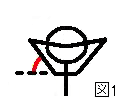 Because the zero position is defined by bone alignment and covered by muscles, it can be difficult to identify visually.
However, there is a simple way to find it.
Relax and place both hands behind your head (Figure 1).
The angle of your arms in this position represents the zero position.
This is also known as the “hammock position,” named after the posture people naturally take when resting with their hands behind their head.
It is considered one of the least stressful positions for the shoulder.
It can be difficult to judge your arm position on your own, so recording your pitching motion or having someone check it for you is helpful.
Also, as fatigue builds up, the elbow tends to drop, so if you feel tired, avoid overexertion and stop throwing.