Arm Cocking
The arm cocking phase begins together with the stride down and involves bringing the ball—previously hidden in the glove—up to the release height.
If not performed correctly, this movement can place significant stress on the shoulder and may lead to injury.
It is important to learn proper mechanics and execute this phase correctly.
Lower the Arms Together with the Stride Down
As you lower your center of gravity during the stride down, your arms should lower at the same time.
To do this, separate the throwing hand (holding the ball) and the glove hand, letting both arms move downward naturally.
This arm movement mirrors the movement of the center of gravity, helping you better feel and coordinate the forward motion.
Synchronizing the arms with the stride down makes it easier to achieve a smooth and efficient transition.
Raise the Arm with a Smooth, Wave-Like Motion
The most important point of the arm cocking phase is how to bring the arm from the lowered position to the “top” position (the highest point before release).
First, an example of what not to do:
Raising the arm while keeping it extended at a nearly horizontal position.
This is commonly referred to as an “arm-style takeback.”
This type of movement often leads to excessive tension and places unnecessary stress on the shoulder.
It also increases the elbow angle at the top position, causing the arm to straighten too early before release.
Swinging the arm in a fully extended state creates significant stress on the elbow due to centrifugal force.
As a result, this “arm-style takeback” can be dangerous for both the shoulder and elbow.
Pitchers who try too hard to generate momentum with a large arm swing often fall into this pattern.
Another mistake to avoid is pulling the arm too far behind the body.
Normally, the arm cannot be raised high when pulled excessively behind the back.
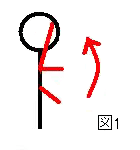 Forcing the arm upward from this position creates an unnatural motion, making a smooth takeback difficult and increasing stress on the shoulder.
The exact limit varies depending on shoulder flexibility, but if the ball becomes clearly visible from behind your body, it may also allow hitters to read your grip and anticipate the pitch.
Ideally, the arm should be raised naturally without tension.
Lift the elbow first, and let the forearm follow.
The motion should feel smooth and fluid, like a wave.
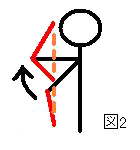 As the elbow rises, the elbow angle becomes smaller, and once the elbow reaches its highest point, the forearm continues upward without changing that angle.
Figure 1 shows the motion from the second base side, and Figure 2 from the third base side.
Keeping the vertical axis of the ball stable, as shown in Figure 2, helps maintain a consistent arm position.
When the arm cocking phase is performed naturally and consistently without tension, it reduces the risk of injury and stabilizes the arm action at release, leading to better control.